Seed catalogs will tell you almost anything can grow in a container, which is technically true and practically misleading — a container-grown pumpkin is possible the way a apartment-grown watermelon is possible: a lot of effort for a small harvest. Some crops, though, genuinely perform as well or better in pots than in the ground.
Reliably good in containers
Lettuce and other loose-leaf greens. Shallow roots, fast turnaround, and you can succession-sow every 2–3 weeks in the same pot for a continuous harvest. One of the best returns on space you’ll get.
Bush beans (not pole beans, unless you’re using a trellis planter). Compact, productive, and they don’t need the root depth that many other vegetables do.
Peppers, hot or sweet. They actually tend to appreciate the heat that a container absorbs on a sunny balcony, and a single plant in a 30+ cm pot produces well through the season.
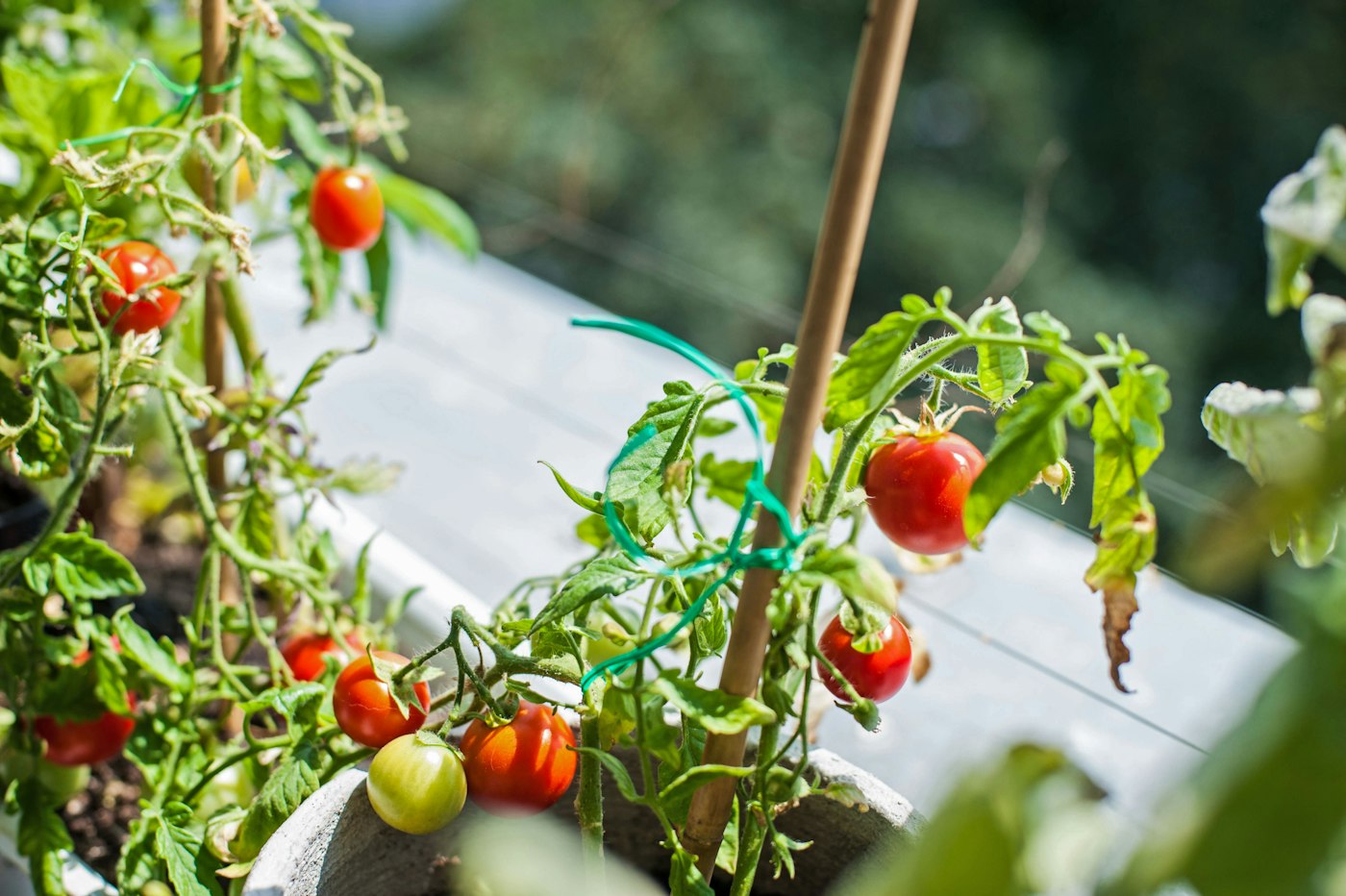
Cherry and patio tomato varieties — specifically bred compact varieties, not full-size indeterminate tomatoes. Look for “patio,” “bush,” or “determinate” on the seed packet. Full- size indeterminate tomatoes need root depth and support that most balconies can’t offer.
Radishes. Fast (3–4 weeks to harvest), shallow-rooted, and a good crop for testing a new pot or soil mix before committing something slower-growing to it.
Herbs — basil, chives, thyme, oregano, mint (mint especially: it’s aggressive enough that a container is the recommended way to grow it, to stop it taking over a garden bed).
Bush cucumbers — compact varieties bred for containers, not the vining types unless you’re pairing them with a trellis.
Scallions/green onions. Extremely shallow-rooted, and you can regrow them from kitchen scraps in the same pot indefinitely.
Strawberries, particularly in a stacking tower or hanging planter where the fruit hangs clear of the soil.
Kale and chard. Both tolerate crowding and irregular watering better than most greens, which makes them forgiving for a first-time container grower.
Carrots — but specifically short or round varieties (“Paris Market,” “Little Finger”) in a deep enough pot (at least 20–25 cm). Standard long carrots in shallow container soil come out stubby and forked.
Technically possible, usually not worth it
Full-size tomatoes, squash, melons, corn, and potatoes in anything smaller than a very large (40+ cm) deep container. They’re not impossible, but the yield-per-square-foot is poor compared to what the same plant produces in a garden bed, and they’re disproportionately prone to drying out and blossom-end rot in a pot. If you have the space for a genuinely large container, they’ll work — just don’t expect the same yield as an in-ground plant of the same age.
Why this matters for what you buy
The vegetables on the “reliably good” list mostly share shallow-to-moderate root depth, which means you don’t need to buy the largest, most expensive containers to grow them well — a 20–30 cm pot handles most of that list. Save the large, deep containers for the handful of crops (peppers, patio tomatoes, carrots) that actually need the extra root room, rather than buying everything in one oversized size “to be safe.”