This article contains affiliate links. If you buy through them, we may earn a small commission at no extra cost to you. See ouraffiliate disclosure for details.
Grabbing a bag of garden soil, or worse, digging some up from the yard, is the single most common reason a new container garden struggles. It’s not a minor difference — it’s close to using the wrong material entirely.
Why garden soil fails in a pot
Garden soil is built to sit in an open bed with worms, insects, and deep drainage moving water through it constantly. Put the same soil in a container and it compacts under its own weight, drains poorly, and suffocates roots. It’s also heavy — a real problem on a balcony with a weight limit — and often carries weed seeds, pests, or soil-borne diseases you don’t want concentrated around a plant with nowhere to escape to.
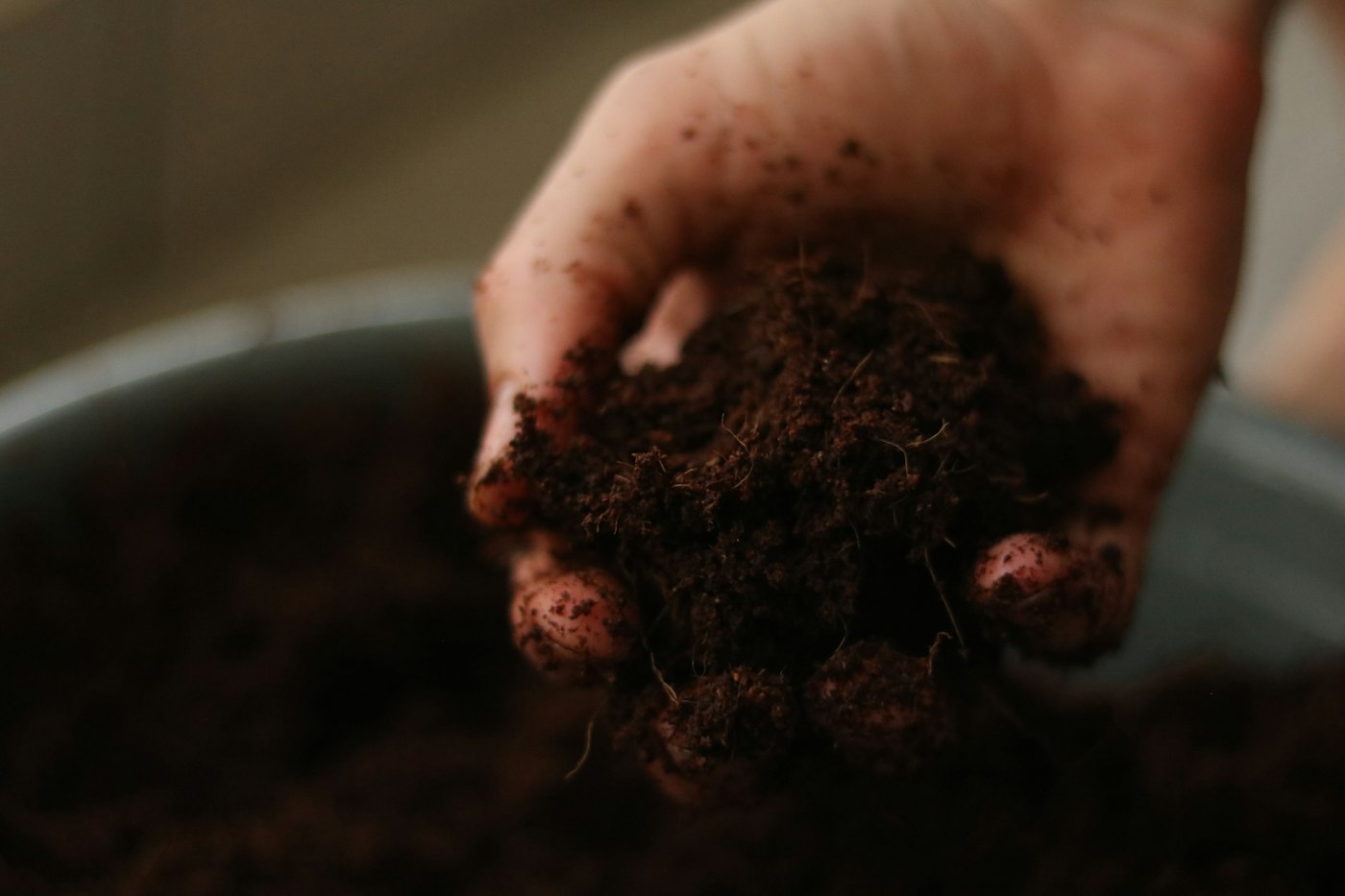
Potting mix is a different product: usually no real “soil” at all, built instead from peat moss or coconut coir, perlite or vermiculite, and compost, specifically engineered to stay light, drain fast, and still hold enough moisture between waterings.
Reading a bag of potting mix
- “Potting mix” vs. “potting soil” — largely marketing; check the ingredient list rather than the name. You want to see perlite or vermiculite (drainage) and some form of organic matter (peat, coir, compost) near the top of the list.
- Perlite content. The white or grey specks. More perlite means better drainage and aeration — important for anything prone to root rot, less critical for consistently thirsty plants like leafy greens.
- Pre-mixed fertilizer. Many bags include a slow-release starter fertilizer, usually good for 2–3 months. After that you’re feeding separately regardless of what the bag said.
- Moisture control formulas. These add water-absorbing polymers. Useful if you consistently underwater; a liability if you tend to overwater, since they hold moisture even after the surface looks dry.
Matching mix to plant type
| Plant type | What to look for |
|---|---|
| Succulents, herbs like rosemary/thyme | High-drainage mix, extra perlite or a cactus/succulent blend |
| Leafy greens, herbs like basil/mint | Standard all-purpose potting mix, moisture-retentive is fine |
| Tomatoes, peppers | All-purpose mix with compost; benefits from added slow-release fertilizer |
| Seed starting | A separate, finer seed-starting mix — standard potting mix is often too chunky for tiny roots |
A practical shortlist
- General-purpose, most containers: a standard all-purpose potting mix with perlite and compost. FoxFarm Ocean Forest Potting Soil
- Succulents and drought-tolerant herbs: a cactus/succulent mix with extra drainage. Hoffman Organic Cactus & Succulent Soil Mix
- Starting seeds indoors: a fine-textured seed-starting mix, separate from your regular potting mix. Jiffy Natural & Organic Seed Starting Mix
The honest caveat
Potting mix breaks down over a season or two — the organic matter compacts and the drainage properties fade. Refreshing or replacing the top third of a container’s mix each year does more for plant health than almost any other single maintenance task, and it’s often skipped in favor of buying new tools or gadgets that matter far less.
See also: self-watering planters explains how reservoir capacity and drainage relate to the mix you use, and 11 vegetables that grow well in containers for which plants are more forgiving of an imperfect mix.